Seedance 2.5
Up to 30-second clips, up to 50 combined references in the listed Topview workflow, and detailed shot and audio direction.
Which AI video model should you choose?
Both Seedance 2.5 and Wan 3.0 support AI video workflows up to 30 seconds, with output options reaching 1080p on supported Topview workflows.
The practical choice comes down to your brief: Seedance 2.5 is worth considering for reference-heavy productions and detailed timing instructions; Wan 3.0 is worth considering when per-second generation cost is a priority.
Compare the supported settings, existing side-by-side videos, and model-specific trade-offs below before you generate.
Seedance 2.5
Up to 30-second clips, up to 50 combined references in the listed Topview workflow, and detailed shot and audio direction.
Wan 3.0
Up to 30-second clips, up to 20 combined references in the listed Topview comparison, and lower published per-second reference rates for selected generation modes.
Limits and prices depend on your mode, account, and selected generation settings. Always review the live generator before submitting a task.
Both models combine video generation and multimodal direction. The table below distinguishes model-level documentation from settings listed for the Topview workflow.
| Dimension | Seedance 2.5 | Wan 3.0 |
|---|---|---|
| Developer | ByteDance | Alibaba |
| Main Use Case | Longer, reference-heavy creative briefs | Multimodal creation with attention to generation cost |
| Duration | 4s–30s, selectable per second | 2s–30s, selectable per second |
| Resolution | 480p / 720p / 1080p | 480p / 720p / 1080p |
| Aspect Ratios | 16:9, 9:16, 3:4, 1:1, 4:3, 21:9 (plus adaptive) | 16:9, 9:16, 1:1, 4:3, 3:4 |
| Text to Video | Supported | Supported |
| Image to Video | Supported | Supported |
| Video & Audio Guidance | Supported in compatible workflows | Supported in compatible workflows |
| Image References | Up to 30 | Up to 10 |
| Video References | Up to 10 | Up to 5 |
| Audio References | Up to 10 | Up to 5 |
| Combined References | Up to 50 | Up to 20 |
| Audio Generation | Available in supported workflows | Available in supported workflows |
| Timing & Scene Direction | Time-coded instructions and per-second duration selection | Shot and scene directions, subject to workflow |
| Pricing | Credits vary by resolution, duration, mode, and plan Eg. 1.5 credits/s for 720p | Credits vary by resolution, duration, mode, and plan Eg. 0.5 credits/s for 720p |
| Best For | Reference-heavy storytelling and detailed creative direction | Cost-conscious generation and focused creative briefs |
Reference limits reflect the settings currently listed in Topview's comparison, rather than a guarantee across every provider or account. Check the generator for available settings. Plan prices are on the Topview pricing page.
Start with the type of video you need, not the model name. These recommendations concern workflow fit — not a claim that one model always produces better-looking videos.
Seedance 2.5 and Wan 3 both support AI video generation up to 30 seconds, but they offer different advantages. Choose Seedance 2.5 for reference-heavy projects, precise timing, and detailed audio direction. Consider Wan 3 for cost-conscious production, longer single-take storytelling, and reference-guided scene creation.
Bring complex creative briefs together with up to 50 reference assets: 30 images, 10 videos, and 10 audio files. Guide character identity, product details, motion, environments, and sound within one generation workflow. While Wan 3 only supports 20 references.
Use reference videos and audio files of up to 30.2 seconds each, subject to the workflow's combined-duration limits. Guide movement, pacing, and sound with longer motion takes or music references.
Choose a video duration from 4 to 30 seconds in one-second increments. Use time-coded instructions to plan shots, actions, transitions, and scene pacing within a continuous video.
Direct dialogue, background music, and sound effects using time-coded instructions. Coordinate speech, action, and atmosphere with native audio generation in a single workflow.
Wan 3.0 lists 0.30 credits/sec at 480p, 0.50 at 720p, and 1.00 at 1080p, compared with 0.70, 1.50, and 3.70 credits/sec for Seedance 2.5 in Topview's published reference pricing. Review the actual credit quote before generating, as rates depend on the selected workflow and plan.
Create a continuous video sequence up to 30 seconds without stitching together multiple short clips. Ideal for product reveals, uninterrupted camera movements, and brand stories that benefit from a single flowing shot.
Use Omni Reference to guide character identity, props, and environments across a longer narrative. Keep your creative world anchored to visual references while developing scenes and actions.
Use internet-search-assisted reference discovery to support video creation with additional visual and contextual material, where this feature is available in your Topview workflow.
Same Creative Brief. Two AI Video Models. Nine Real-World Scenarios.
How do Seedance 2.5 and Wan 3 compare when given the same creative instructions? Explore nine side-by-side video tests covering cinematic VFX, complex action, multimodal references, documentary storytelling, style transitions, dialogue, character interactions, dance synchronization, and literary adaptation.
Each comparison presents the outputs from both models alongside the original prompt and reference assets where applicable. Watch how each model handles the same creative challenge, examine the details that matter, and explore which model better suits each type of project.
Text to Video · 30s · 16:9
A Norse god hovers above a fractured obsidian shrine as golden lightning, floating debris, and glowing runes build toward an explosive climax. The camera performs a continuous 360-degree orbit while the character summons a massive battle hammer and releases a powerful shockwave.
This test challenges both models to combine complex visual effects, character movement, dynamic camera direction, and a continuous action sequence within a single 30-second video.
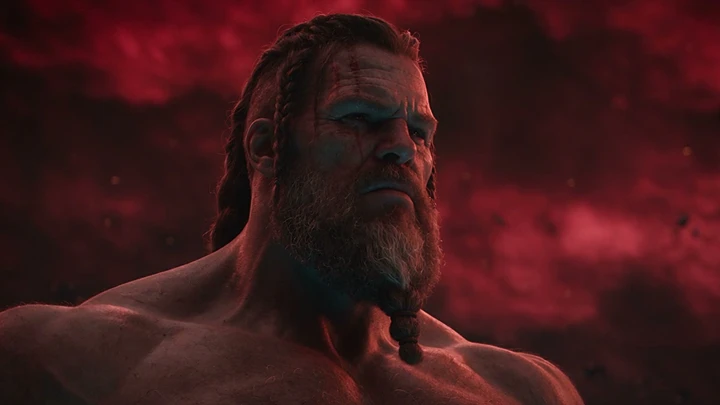
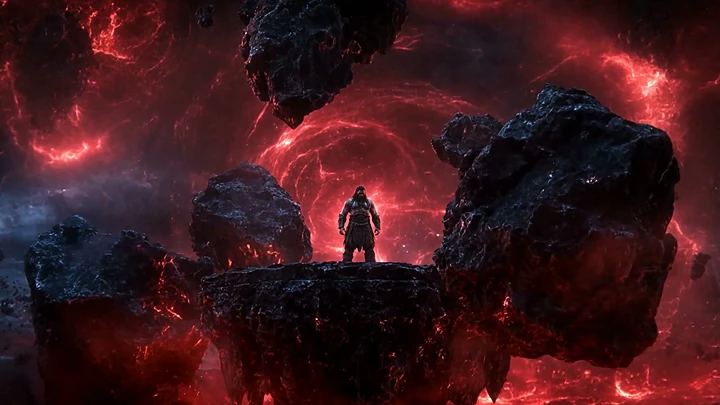
Cinematic VFX generation requires more than impressive individual frames. The model must coordinate camera movement, character actions, and visual effects while maintaining a coherent sequence. This test helps reveal how each model handles visually complex scenes with multiple dependent actions.
Seedance 2.5 holds this brief together better. Across the clip, one bearded god stays on one fractured peak: a solemn close-up, the same face with glowing eyes, lightning building on the shrine, then the figure airborne with a hammer. Wan 3.0 makes stronger single effects — a red portal, a debris storm, a gold blast, and a blue rune circle — but the god is missing from the middle of the clip, and the hammer shows up as a pose after the blast rather than a fusion you can follow. The sampled frames do not show a completed 360-degree orbit for either model. Choose Seedance 2.5 when one character and one location have to escalate into the hammer. Choose Wan 3.0 when a spectacular effects shot matters more than staying on the same face and shrine.
Multi Reference · 2 Images · 30s · 16:9
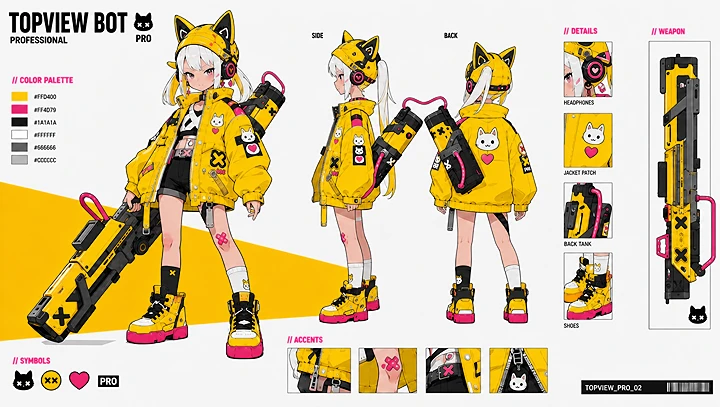
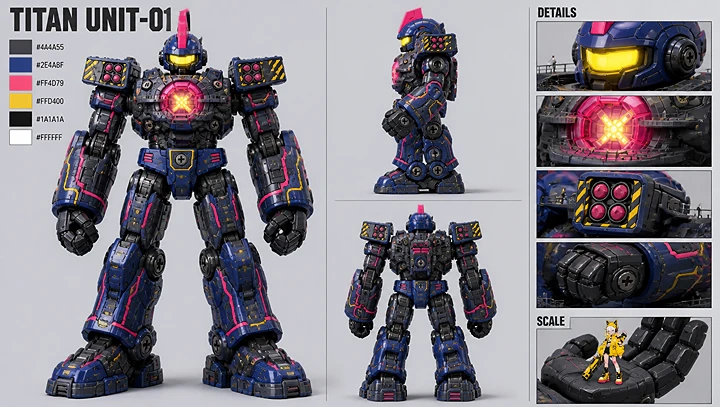
A small heroine, TOPVIEW BOT, battles a giant toy mech named TITAN in a colorful toy-city environment. Two reference images define the exact appearance of both characters, while the prompt specifies their relative scale, weapon directions, attack sequences, and continuous movement.
The 30-second battle includes missile attacks, evasive maneuvers, airborne combat, climbing across the mech's armor, and a final energy attack.
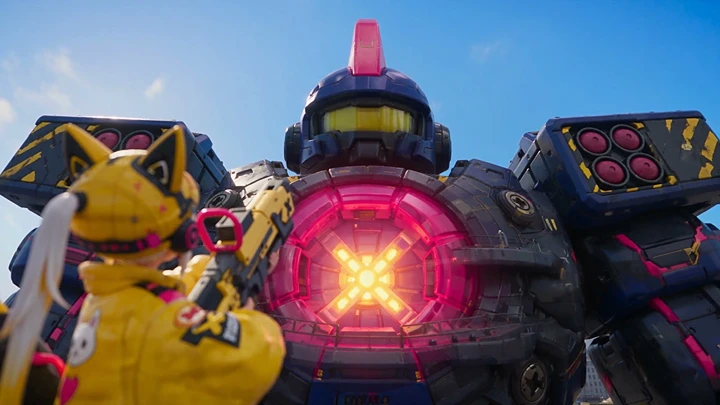
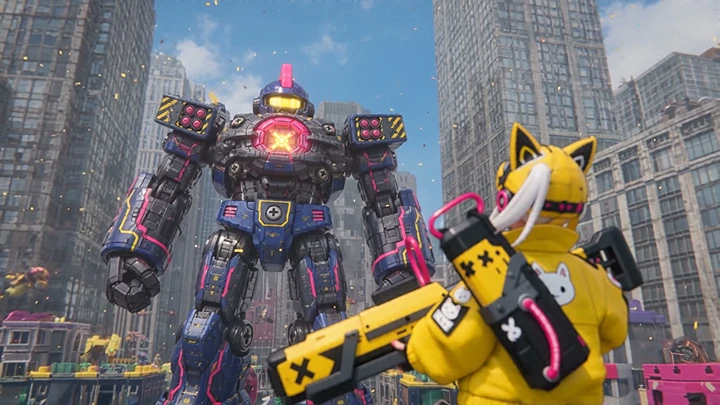
Complex action scenes place heavy demands on AI video generation. The model must maintain consistent characters, understand relative scale, preserve spatial relationships, and coordinate multiple actions over time. This test examines whether visually ambitious combat sequences remain logically understandable.
Wan 3.0 is the better match for the reference sheets in this fight. Its opening keeps the white twin tails, cat-ear cap, yellow jacket, and cannon readable against the navy mech, pink crest, yellow visor, and pink chest core, and a later frame shows missiles in the air before she is back on the armor. Seedance 2.5 wins the scale read in the fist shot, where she is tiny against the hand, but she drops to street level and her face and weapon are hard to check once the camera pulls wide. Seedance ends on a pink blast with the shooter cropped out; Wan ends with her small against the visor. Choose Wan 3.0 when the character sheets and the missile beat have to stay recognizable. Choose Seedance 2.5 when the giant-versus-tiny contrast matters more than a clean reference match.
Multi Reference · 3 Images · 30s · 16:9
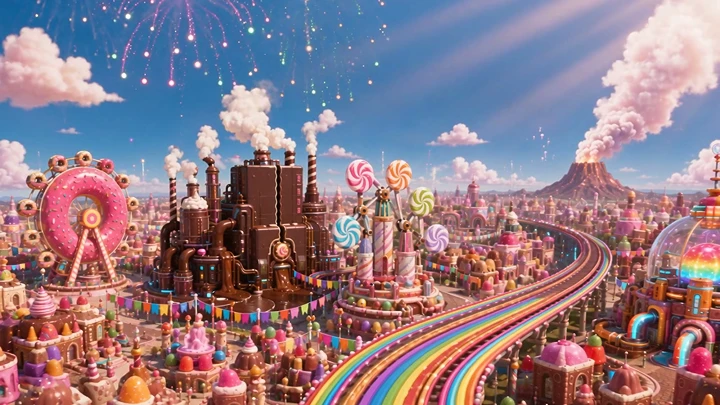
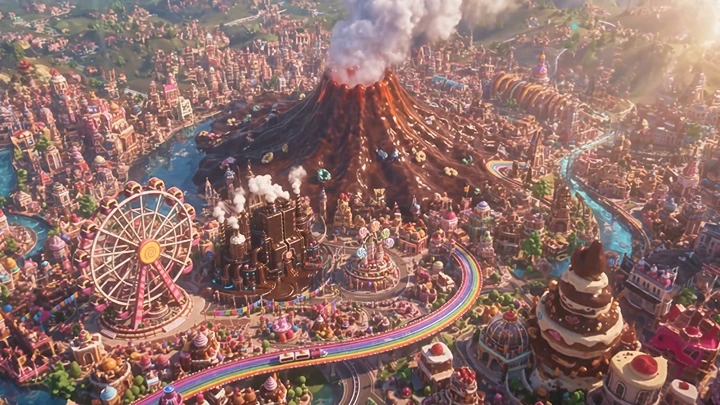
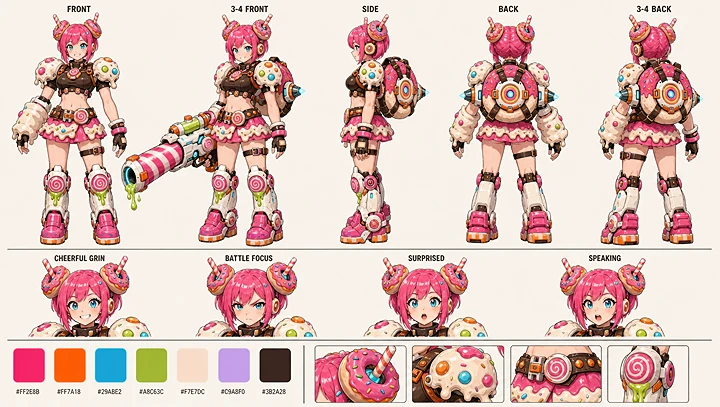
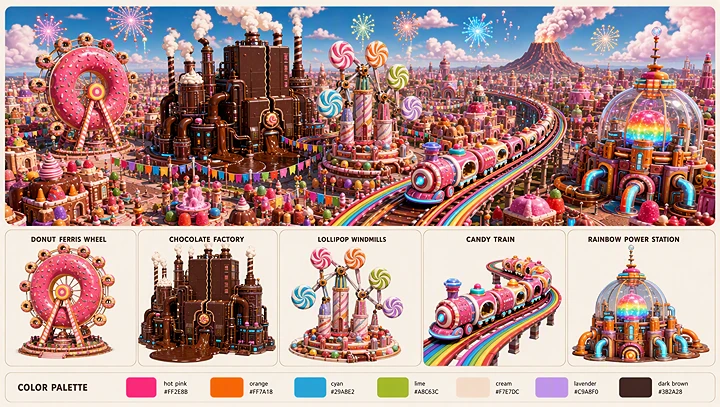
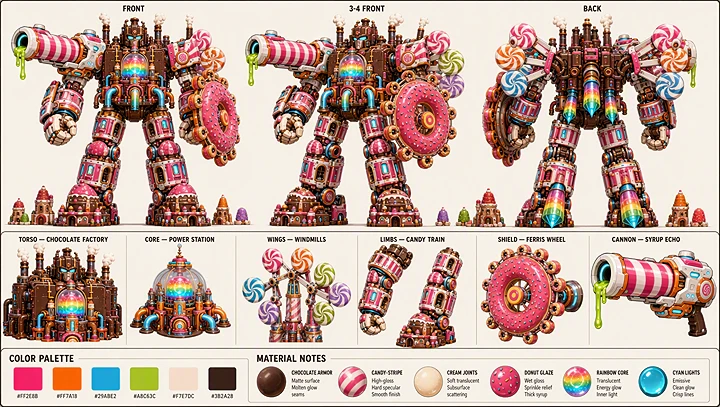
A colorful Candy Kingdom faces an escalating threat, and the heroine SUGAR POP must defend the city before its landmarks combine into a giant Candy Super Mecha.
Three reference sheets define the heroine's appearance, the Candy Kingdom environment and its landmarks, and the final assembled mecha. The prompt requires both models to preserve these designs while generating a complete 30-second action story.
Multi-reference generation requires a model to understand how separate visual inputs relate to one another. Beyond reproducing individual objects, it must preserve identity, combine design elements, and maintain a consistent creative world across changing scenes.
This test helps evaluate how reliably each model translates several reference images into a longer, structured video.
Seedance 2.5 is the stronger multi-reference result. Its close-up keeps Sugar Pop's pink bob, blue eyes, and candy hairpieces; the middle of the clip launches separate candy landmarks; and the wide robot matches the mecha sheet, with the striped shoulder cannon, donut forearm shield, and candy limbs in one body. The ending is a colored beam with that robot still in frame. Wan 3.0 opens with the clearer Candy Kingdom — ferris wheel, volcano, and candy streets — and it is the clip that shows the dessert monster over the city. Its later frames stay on a candy train and a blurred robot face, so the assembled mecha never locks together the way the design sheet specifies. Choose Seedance 2.5 when the character, the combination, and the finished mecha all have to survive in one video. Choose Wan 3.0 when the kingdom and the monster need to read first.
Text to Video · 30s · 16:9
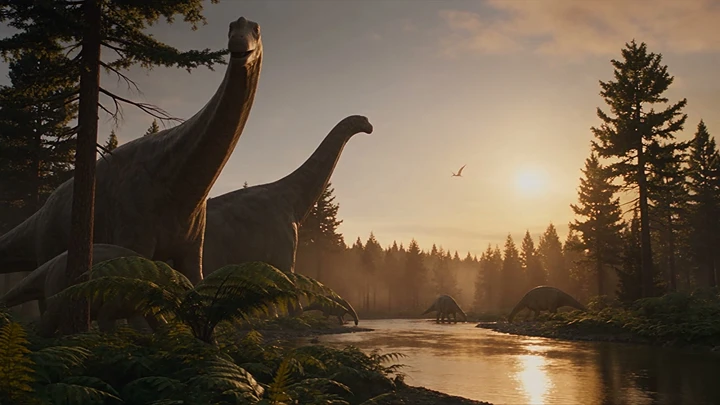
A natural-history documentary portrays the final moments of a prehistoric ecosystem, moving from a peaceful dinosaur-filled valley to a catastrophic impact, shockwave, volcanic eruptions, and an ash-covered Earth.
The prompt combines a precisely timed English voice-over with documentary-style cinematography, large-scale environmental events, realistic animal movement, and a quiet orbital ending.
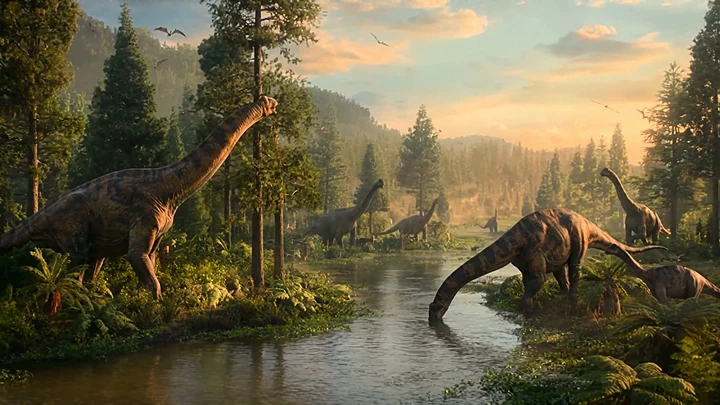
Documentary video generation depends on accurate communication, not just cinematic imagery. Narration, scene timing, visual storytelling, and environmental continuity must work together to communicate a complete sequence.
This test examines how each model coordinates spoken narration with complex visual events over 30 seconds.
Wan 3.0 carries the picture story further. The frames move from a golden river valley to a head-on stampede under a dust wall, an eruption, a fallen animal in the ash, and a gray Earth in orbit. Seedance 2.5 also goes from the sunlit valley to a running herd, a flood with a small stegosaur, and an ash-gray sauropod, but it is still in the peaceful valley well into the clip, and its last sampled frame is featureless gray rather than orbit. The flood, and the small animal against the landscape, are clearer on Seedance. These frames do not confirm the spoken wording, pacing, or pauses. Choose Wan 3.0 when the video has to reach the collapse and the orbital ending. Choose Seedance 2.5 when the valley and the flood need to stay naturalistic, then check whether your own generation reaches orbit.
Text to Video · 30s · 16:9
A female dancer performs one continuous routine while traveling through multiple visual worlds. The video begins in a realistic European street before transitioning into cyberpunk, black-and-white silent film, 3D animation, and oil-painting styles.
Each transformation changes the visual environment and outfit while the dancer's identity, choreography, and musical rhythm are intended to remain consistent. The sequence ends with all four alternative worlds appearing together in a final composition.
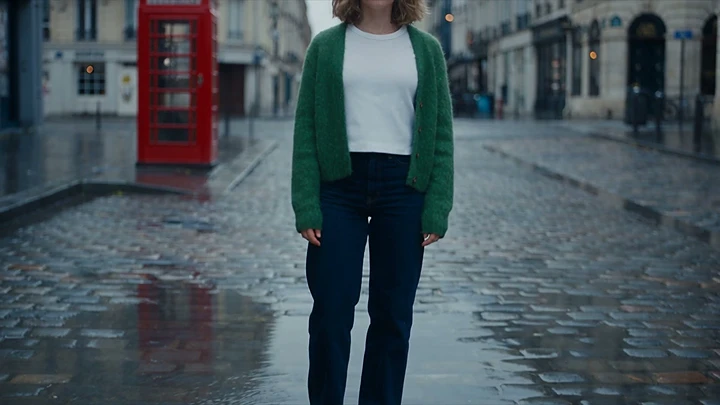
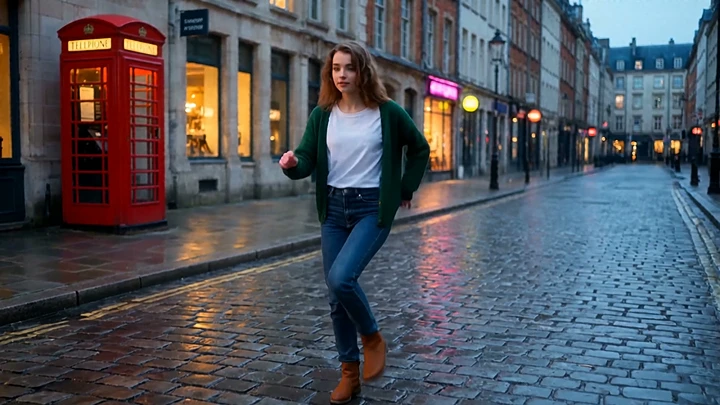
Style switching requires a model to separate visual appearance from subject identity and motion. The environment and artistic treatment may change dramatically, but the underlying character and action must remain understandable.
This test explores how each model handles coordinated transformations across multiple visual styles within one continuous creative sequence.
Seedance 2.5 covers more of the requested worlds. The samples show the wet European street and green cardigan, a neon cyberpunk outfit, a letterboxed black-and-white silent-film frame, a starry oil-paint turn in a blue gown, then the original look surrounded by four separate panes. Wan 3.0 dances more clearly in the street and cyberpunk sections, and its yellow-dress 3D-animation beat is a full scene rather than a picture inside a pane. The silent-film world does not appear in Wan's samples, and the ending is four separate pictures instead of one poster with the dancer at the center. Choose Seedance 2.5 when the style list and the four-world ending are the point of the brief. Choose Wan 3.0 when readable choreography and the cartoon world matter more than the silent-film segment.
Multi Reference · 3 Images · 15s · 16:9
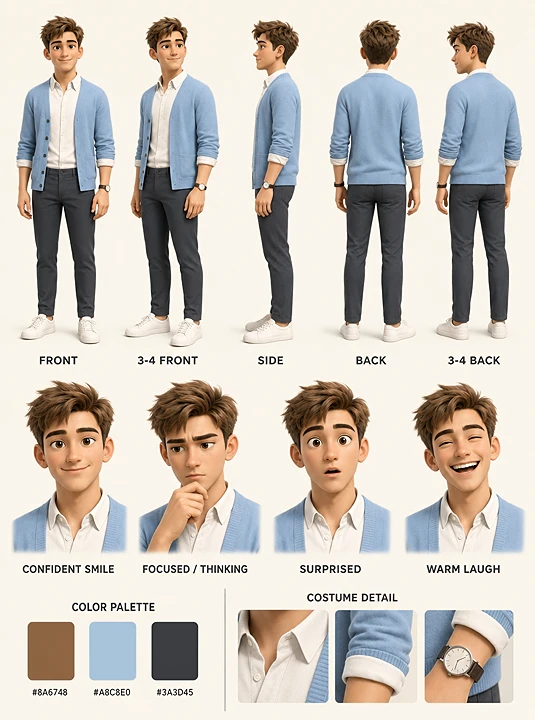
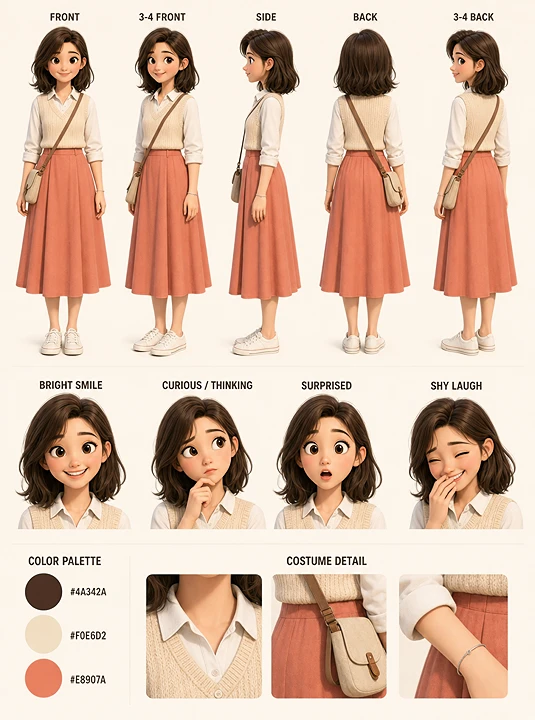
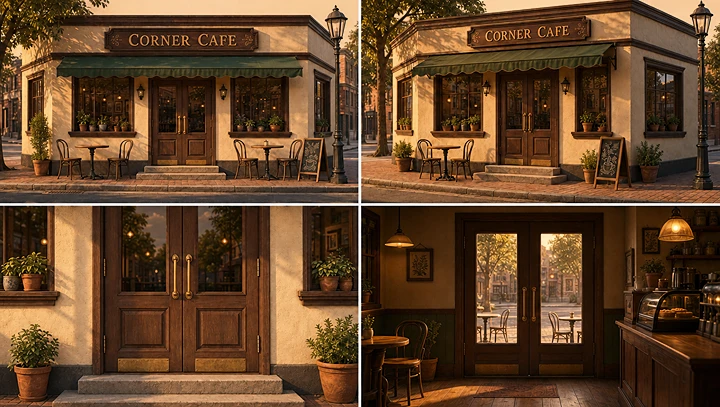
Two stylized animated characters, HAORAN and XIAOYU, meet unexpectedly outside a café, exchange four lines of English dialogue, and enter the building together.
Three reference images define the characters and café environment. The prompt requires accurate dialogue, natural facial expressions, consistent character designs, and a specific door-opening action.
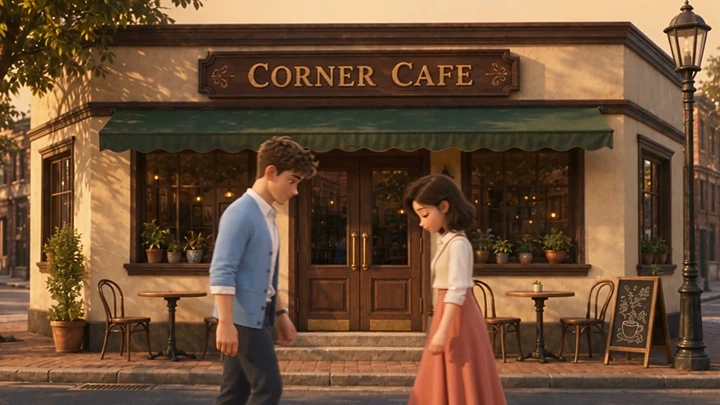
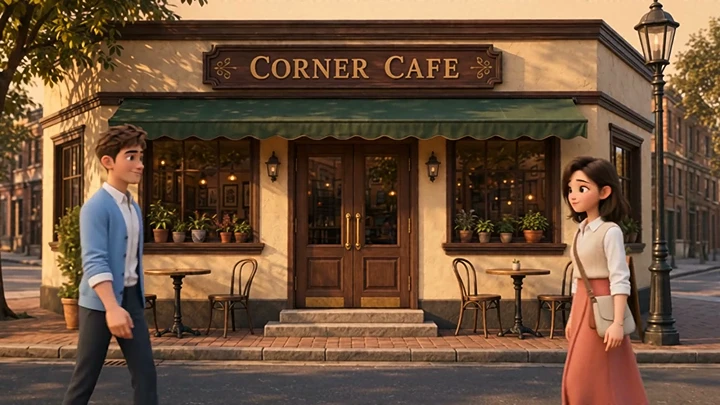
Dialogue scenes combine several demanding tasks: speech generation, lip synchronization, character consistency, emotional performance, and coordinated physical interaction.
A convincing result depends on these elements working together. This test helps evaluate how effectively each model handles character-driven storytelling.
Both clips keep the reference designs: the blue cardigan, cream vest, salmon skirt, and the Corner Cafe awning. Mouths are open during the conversation, but still frames cannot confirm the four lines or true lip sync. The door is the visible difference. Wan 3.0's last frame shows him holding the brass handle while she goes through the open doorway. Seedance 2.5 walks the pair to the entrance and inside, without a clear moment of the door held open outward. Choose Wan 3.0 for this brief when the entrance action has to match the prompt. Either model works when the priority is keeping the two characters and the cafe consistent; listen to the lines before locking a take.
Text to Video · 15s · 16:9
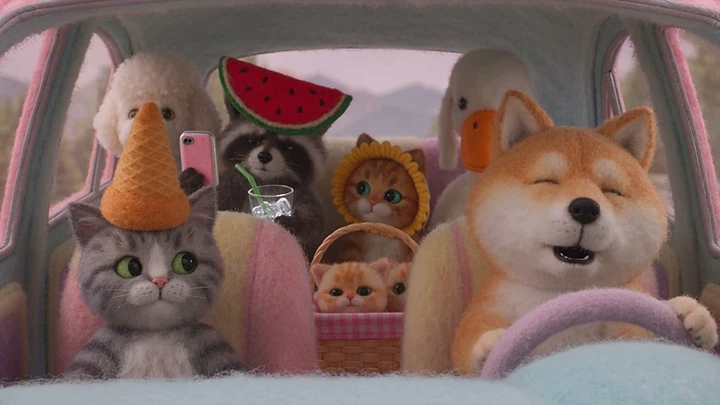
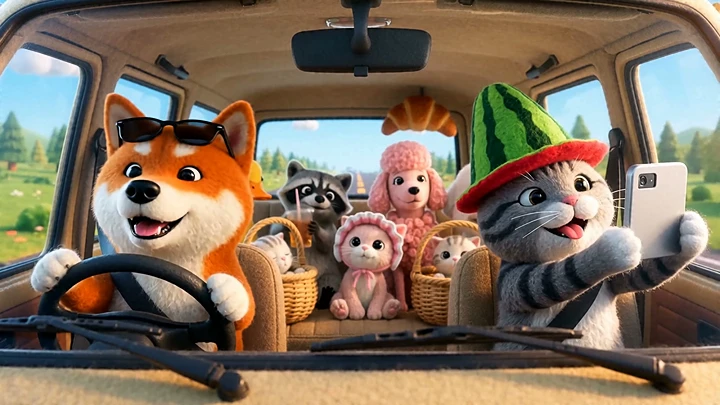
A group of expressive plush-style animal characters takes a chaotic road trip together. Inside the moving vehicle, each character performs a different action while unexpected events create a chain of comedic reactions.
The scene includes a singing Shiba Inu driver, a selfie-taking cat, a photobombing duck, shifting hats, bouncing passengers, flying objects, and coordinated group reactions.
The prompt calls for a fixed camera angle and consistent plush-felt rendering throughout the 15-second sequence.
Multi-character acting tests a model's ability to manage several independent actions within a shared environment.
The challenge is not simply generating many characters at once, but preserving their identities, coordinating their interactions, and maintaining logical cause-and-effect relationships across the scene.
Seedance 2.5 keeps the locked interior. The same windshield view holds the shiba at the wheel with its mouth open, the watermelon-hat cat, and the duck. The duck's neck comes forward, but the hat swap, the grape catch, and the final thumbs-up are not visible. Wan 3.0 shows more of those gags: a croissant on a head, the poodle pressed against the white dog, a grumpy kitten in the basket, and a thumbs-up from the driver. The camera also leaves the locked angle, cutting from the full cabin to the back seat and into the basket, and the hats and seating reshuffle. Choose Seedance 2.5 when one fixed camera and a stable cast matter. Choose Wan 3.0 when the comic chain reaction matters more than a single uninterrupted angle.
Multi Reference · 1 Image + Audio · 15s · 9:16
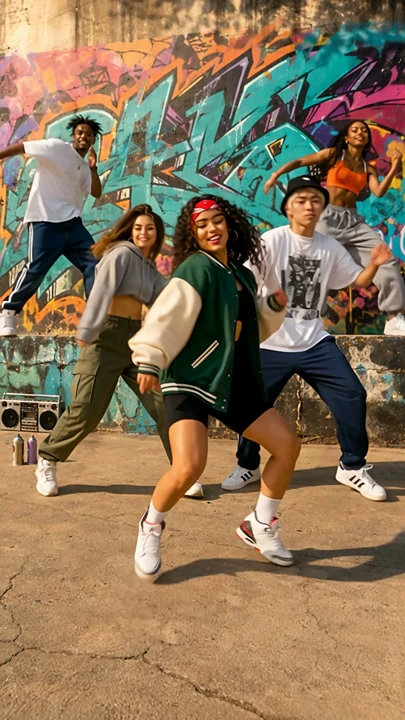
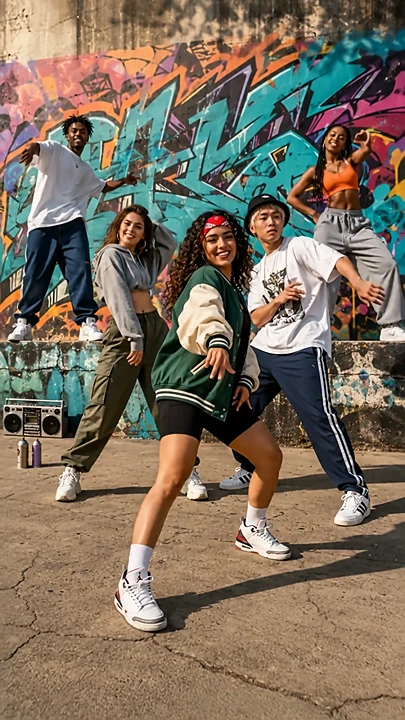
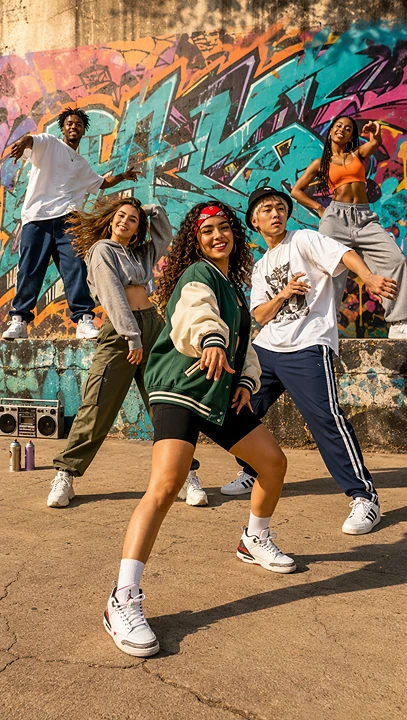
Five dancers perform a coordinated street-dance routine in a graffiti-covered plaza, using a reference image to define their appearance and an audio reference to guide the choreography.
The routine begins in a V-formation before transitioning into a horizontal line. The prompt requires all five dancers to preserve their identities, complete the formation change, and synchronize their movements with the original music in one continuous shot.
Dance generation requires precise coordination between visual movement, character identity, group positioning, and audio timing.
A visually appealing dance sequence may still fail if performers lose synchronization or the formation changes incorrectly. This test examines whether each model can coordinate multiple subjects with an external music reference.
Wan 3.0 opens closer to the reference photo: five dancers, the green varsity jacket in front, and a V-like stance against the graffiti wall. Midway, that group disappears and one dancer fills the plaza, before a later frame returns with a looser crowd. Seedance 2.5 keeps a group in every sample, including the green jacket, but later frames add people and do not show a clean change from the starting V into one horizontal line of the same five. Stills cannot confirm that either clip stays on the original beat or leaves the audio untouched. Choose Seedance 2.5 when all of the dancers need to remain in frame. Choose Wan 3.0 when the first shot must match the reference, then watch the middle of the clip before accepting the formation change.
Text to Video · 15s · 16:9
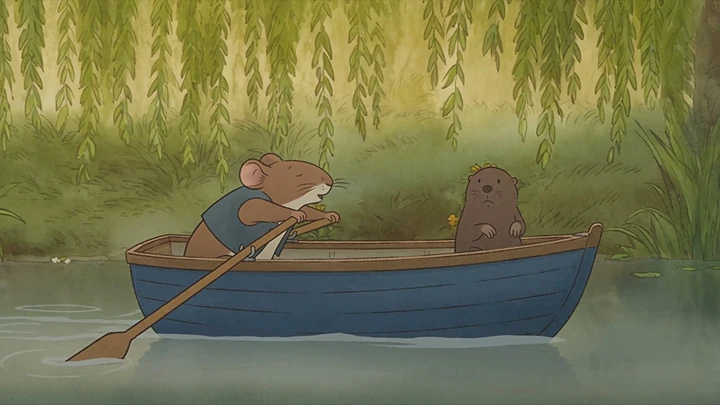
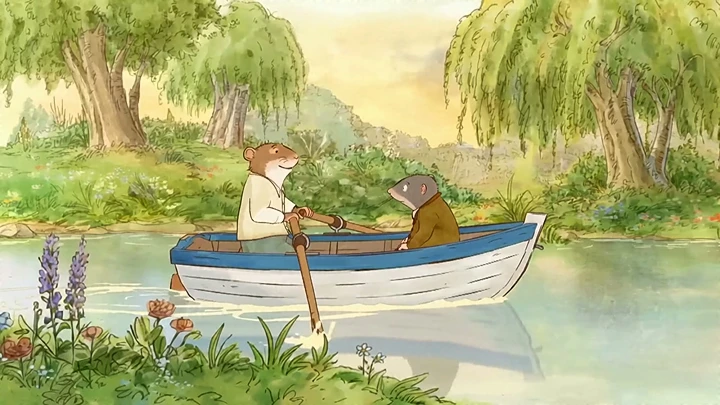
A short scene from Kenneth Grahame's The Wind in the Willows is adapted into an Edwardian watercolor-style animation.
A water rat rows a blue-and-white boat along a peaceful river while a mole sits in the stern. As the rat becomes absorbed in conversation, the boat strikes the riverbank, causing the rower to tumble backward before recovering.
The test challenges both models to reproduce a specific literary sequence while maintaining character roles, physical actions, and a consistent illustrated appearance.
Literary adaptation requires a model to translate written storytelling into a clear visual sequence.
The challenge is not simply producing attractive storybook imagery. The result should preserve character roles, cause-and-effect relationships, and the essential events that make the original scene recognizable.
This test helps evaluate how faithfully each model converts a detailed literary passage into a short video.
Seedance 2.5 follows the passage further. The rat rows while the mole sits in the stern, then the rat is on his back with his feet in the air, then he sits up again. The boat reads as solid blue rather than blue outside and white within, and the bow hitting the bank is implied by the fall rather than shown. Wan 3.0 matches the boat better — blue outside, white within — and holds a steadier Edwardian watercolor while they row under the willows. Its late frames tip the boat toward the flowers and then return to calm rowing, so the heels-in-the-air fall and the recovery are missing. Choose Seedance 2.5 when the crash and the tumble have to be readable. Choose Wan 3.0 when the painted boat and the quiet river matter more than the punchline.
"Believe me, my young friend, there is nothing—absolute nothing—half so much worth doing as simply messing about in boats. Simply messing," he went on dreamily: "messing—about—in—boats; messing—" "Look ahead, Rat!" cried the Mole suddenly. It was too late. The boat struck the bank full tilt. The dreamer, the joyous oarsman, lay on his back at the bottom of the boat, his heels in the air. "—about in boats—or with boats," the Rat went on composedly, picking himself up with a pleasant laugh." — Kenneth Grahame, The Wind in the Willows (1908), Chapter I, Project Gutenberg #27805 (Scribner 1913 ed.)
Original Source: Kenneth Grahame, The Wind in the Willows (1908), Chapter I. Public-domain text available through Project Gutenberg.
9These nine side-by-side comparisons demonstrate how Seedance 2.5 and Wan 3 respond to specific creative briefs. Results may vary across generations, settings, and reference inputs. Comparative verdicts should be based on the displayed outputs and documented evaluation criteria.
Our evaluation approach focuses on whether each output solves the original creative task.
Each comparison uses the same intended prompt and source assets. If a setting is unavailable on one model, that difference should be documented rather than treated as an identical test condition.
We check whether the requested subjects, actions, scene order, and endings appear in the output. Missing key events count as limitations even when the video looks polished.
For image-led cases, we compare characters, products, outfits, props, and locations against their source material. More accurate reproduction is not necessarily the same as more attractive styling.
We inspect camera paths, body movement, object interactions, and the relationship between successive shots.
We look for identity drift, abrupt resets, and inconsistent spatial relationships.
For audio-led cases, we check spoken words, speaker attribution, lip synchronization, sound cues, and beat alignment when the relevant source files are available.
A reliable performance comparison requires submission records for every attempt, including failed generations, retries, and moderation rejections.
Our planned benchmark uses three generations per model for simpler tasks and five generations per model for more complex tasks, totaling 74 generation attempts across both models.
Each completed video is evaluated independently using a predefined scoring rubric.
To avoid cherry-picking visually attractive results, the representative benchmark output is selected based on its proximity to the median blind quality score for that model and scenario.
Different models can interpret identical instructions differently.
One output may excel in composition while another preserves a character or action more closely. The best model for a project is the one that meets the required quality standard at an acceptable cost.
Compare the same output settings—not just the lowest advertised rate.
Both models use Topview credits, but actual charges depend on the selected model variant, workflow, duration, resolution, and account plan.
The generator's credit quote before submission is the most relevant figure for your project.
| Resolution | Seedance 2.5 on Topview | Wan 3.0 on Topview |
|---|---|---|
| 480p | 0.70 credits/sec | 0.30 credits/sec |
| 720p | 1.50 credits/sec | 0.50 credits/sec |
| 1080p | 3.70 credits/sec | 1.00 credits/sec |
If an output needs multiple attempts before it is usable, the actual production cost includes those attempts.
Compare total credits consumed, output quality, and the number of acceptable results—not only the advertised per-second price.
Seedance 2.5 · Wan 3.0
Better AI video starts with the right model for the job.
Choose Seedance 2.5 for reference-heavy direction and detailed creative control, or explore Wan 3.0 when your brief fits its available inputs and you want to compare generation costs.
Keep your prompt and references consistent, review the outputs, and choose based on the result — not the model name alone.